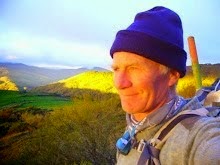
Scotland to Spain.
So far I have covered 600 miles in ten days. Started at St. Fillans west of Perth, Scotland and coasted downhill to Oban, stayed at hostel. Long ride in the rain to Tarbert, camped at the castle, Robert the Bruce stayed here nearly 1000 years ago. Beautiful ride across the Isle of Arran, ferry back to the mainland, camped by roadside at Ardrossan. Long day south for Belfast ferry. Arrive Belfast on a wet Saturday night, scaled chain-link fence with bike and camped in bushes near the docks. Up at 3am and biked thru empty streets, streetlamps lit the way until daybreak. Stayed at hostel in Ballycastle, long ride with 1000ft climb at the end, knackered. Made it to Letterkenny the following day, thru Glenties and Ardara, camped by roadside before Killybegs. On to Sligo and hostel, met Teri, a retired Frenchman walking across Europe, "the secret to this lifestyle is for your mind and body to be friends" he said. Currently only bits of me are on speaking terms with other bits. Another long day to Edgeworthstown, sleep behind derelict house. Lucky stop at Netti's Cafe in Delvin for the best traditional breakfast so far, accompanied with huge steaming pot of tea. On towards Navan, had first puncture, exploded new inner tube with too much pressure. Stopped at bike shop for supplies, now wearing flouresent lime green cycle jersey and am warm and dry for the first time despite another rain shower. Leave for Rosslare in two days.
Saturday, October 20, 2012

Saturday, September 15, 2012
Bus Blues
Bicycling through the mountains and across the steppe is a breeze. But, travel by bus with a bike and you enter a pythonesque world with a Spanish script. At the Buenos Aires bus terminal I played an hour long game of snakes and ladders as i followed directives from bus officials. Twice I took the fully-loaded bike down flights of stairs and once up a flight of stairs and once up an escalator. At San Julian they refused to take the dismantled bike, even though the rear of the bus is for freight.
Patagonia Unplugged
Wind, long stretches without water and heavy truck traffic made biking Ruta 3 up the Atantic coast too much of a challenge. My first stop was at Puerto San Julian. Magellan, Drake and Darwin all touched shore here. This little town would be perfect, with it´s speedbumps instead of traffic lights and a main street of single story bungalows. But, by midday I had to shelter in my tent from the gale force winds. Rose at 3.30am to get fifty km in by noon. At times I was pushing the bike downhill. Whirlygigs of dust rose vertically in the distance and then shot across the landscape horizontally. Suddenly the bike and I were lifted off the road and carried in the air, like plastic garbage, and dumped twelve feet away in a mangled heap. I hitched a ride in a Ford Ranger. The speedometer held steady at 140km until the next town 4 hours away. Bus ride a few hundred km north To Trelew. I´d lost track of the date. The explosions started early evening and between midnight and 2am on Christmas Day there was a heavy fireworks bombandment on all sides. The campsite the next morning was covered in a low cloud of smoke from the grills roasting slaps of beef. Smell of burning flesh filled the air. Next stop was Puerto Madryn, more wind, dust and a monster cruise ship tied to the pier. Ride the bus to Buenos Aires and then biked south to the perfect hidaway in the sun. Chascomus is a former cowtown with cobble streets and a ramshackle 1950s look and feel. Best of all the temps are in the high 20s, the vegation green and almost sub tropical and no wind.
Wednesday, January 18, 2012
Newfoundland By Bicycle
NEWFOUNDLAND BY BICYCLE
St.John’s is like Galway town in Ireland tipped on its side. The downtown is a crescent of colourful pubs and shops hugging the bowl-shaped harbour. I arrive at the Youth Hostel the same time as a windswept blonde dressed in red. Heike has just biked from Vancouver. We celebrate her achievement with Guinness to the lilting melodies of a musician who played with the intensity of Van Morrison.
My plan is to go as far north as possible before snow drives me back. It is early October and my friends say I am mad biking on a rain-soaked island during the stormy season. I am here because the meaning of life is to be feel alive and I am never more alive than when setting out at dawn into the unknown. I also do it because I can. Air mile points pay the airfare, bike-touring costs are minimal and fitness and energy magically appear when you hit the highway. Living off the grid gives me the affluence of time.
First stop is Cape Spear; I am closer to Ireland than Vancouver. The tang of the sea complements the sharp taste of the partridgeberries growing along the cliff top. Hunger and thirst put the wheels to the road. I fuel up at the general store in Petty Harbour and I am collared by a marauding CBC reporter travelling the back roads for a story. I have been talking to the bike all day (we had not been together since Patagonia two years ago and had much to catch up on) and continue the conversation to the microphone. Now my oats addiction is public knowledge.
It is ‘Fabreze’ country for a hundred kilometres around the city. A world of new bungalows and mown lawns. Late model pick-up trucks and Harley Davidson’s are roadside company. The language, however, echoes the past. “How are ya, me darling,” says the waitress as she shays over, like Bette Midler, with the menu. Nautical terms splice roadside chat - “Where are ye bound?” Twice I strip off and wash in lakes, which still have a faint memory of summer temperatures. I take a circuitous route west via Conception bay to avoid commuter traffic on the Trans Canada Highway. Roadside camping is a breeze and the low-tech canned fuel stove works every time. It burns with a single flame and this means a hot meal without leaving the tent or sleeping bag – essential when I learnt to stay inside during downpours. The radio warns Hurricane Ophelia is getting closer. Hamlet’s Ophelia drowned after falling into a pond, this does not bode well. Steady rain precedes her arrival and I am soaked and chilled. Cycling becomes a balancing act; on one side - rain, spray from eighteen-wheelers, sweat and wind chill and on the other are huge plates of pan-fried cod and chips and constant peddling. Ophelia will be overhead tonight and I have never camped in a hurricane. A campground sign beckons; it is closed for the winter. I pitch the tent and warm up with a hot meal. The owner is surprised to find a camper; he generously welcomes me to stay the night.
During the night, the noise from the rain is like being under a waterfall. The Eureka Spitfire solo tent and Silshelter flysheet keep me dry and the sky clears by noon the next day. The 100kph wind gusts are not a derrentant on the relatively sheltered coastal road. I keep peddling enjoying the crashing waves, although hunger pangs are a distraction, finally at 5pm there is a roadside diner.
Clarenville is the kind of town you always hope to find. Bicycles travel at the same speed as a horse or sailboat and are equally exposed to the elements, when in the wilds the present joins the past. That said, it is really nice to sit down to a hot meal or to the library internet. I bike on through steady rain and pass a spot marked with bright yellow flowers. A cyclist had been hit by a truck loaded with overhanging roof trusses. The temperature is 5 degrees C, it is late afternoon, I am chilled and the forecast is for two more wet days. A technician’s van stops, David, the driver, offers me a ride to Bonavista. I gladly accept. We splash through picturesque Trinity Bay and past John Cabot’s monument on the headland. The Youth Hostel is full and I stay at a bright B & B. The next day I move to the hostel. Interesting characters, most are either local workers or tech students at the college. I dry everything and eat every few hours.
I have been a week on the road and am in the groove. The radio and internet give me a head’s up on the forecast and the laundromat dryer is my confession box – I bare all, dump everything in and after thirty minutes of mad whirling and crashing I walk away a new man – and all for $2.50. The trick with food is that it is the food you ate yesterday gives you the energy for today. Sometimes I keep peddling long after I should have stopped to eat, I later regret this. The landscape opens up to stunning vistas of balsam fir, black spruce and wild rivers in flood. Twice along the middle section of the island, a young couple, fellow guests at the B & B, stopped and gave me a ride. This is good because I will travel this road on my return.
The road from Deer Lake to Rocky Harbour on the west coast is spectacular, steep glaciated valleys and dramatic Lord of the Rings landscape. Hills make biking fun, the speedometer edges higher to the mid-fifties; I crouch low and grin madly. Pushing the bike uphill is a reminder to travel light; it is also gives one set of muscles a break. I stay at the KOA campground a few kilometres from Gros Mourne. Luckily, it is still open this late in the season. It is Thanksgiving and the manager’s wife gives me a huge plate of turkey dinner.
Climbing Gros Mourne is the highlight of the trip. The temperature dropped to -5 during the night, dawn brought bright sun and a cloudless sky. This is fortunate because it is a tabletop mountain and not advisable to climb when the summit is in cloud. It is a 16km hike with an 800m climb and takes 7 hours. The first section is through a forest, the trail opens up at the base and then it is a steep scramble up a scree-covered gully. Just below the flat-topped summit, there was twenty feet of ice-hard snow. I was glad to have picked up a discarded walking stick; even then, I still cut steps with my hunting knife. The view on top is magnificent and unchanged since the Paleo-Indians stomped the landscape as the ice-sheets receded 10,000 years ago. I sit on the top and watched six moose in a valley far below. For some people ecstasy is a pill, for me it is a mountain.
The forecast warns of snow to the north. I wanted to continue biking up the coast and give the Viking settlement a nod. Instead, prudence prevails and I turn back east. My plan is to explore the peninsulas and outports along the way.
I return to the Trans Canada Highway in tune with the melody of the countryside, the sun shines bright and the autumn colours are sharp in the crisp air. There is no wind and the bike glides effortlessly eating the miles, the only sound is the click of gears changing with the grade. On two occasions, I stay in the tent to avoid the rain. I read The Hobbit, Bilbo Baggins is a kindred spirit. I take the turn off for Twillinggate. There are frequent picture post card views of rocky shores lined with kelp and drift wood. The road continues over a series of islands joined by causeways and high bridges. Crow Head juts out into the bay, on the horizon I can just make out flat-topped icebergs. Weathered clapboard houses fit into the landscape. Generations lived a hardscrabble existence here by living off the sea. The cod are gone and global warming and a generation who prefer iPods to ice flows will likely decide the future of the seal hunt.
Two days of leisurely peddling and I am back in Gander. The late afternoon rush is on; it is a culture shock after days of being on my own in the wilds. Big feed at Subway, a shower at the public swimming pool and then the library for the internet.
Moose are the IEDs of Newfoundland roads and cause about 700 accidents each year. This results in an unexpected benefit to cyclists. Vehicles travel noticeably slower and drivers scan the shoulder for the lumbering beasts. Many people avoid driving at night and it is a relief to camp close to the road without the rumble of wheels.
I turn off the TCH for Placentia; it is a long day with food stops. Late afternoon I crest a wicked hill and look down on the historic harbour. First stop is the clothes dryer and then really bad fast food chicken. The growing darkness enabled me to camp in some bushes on the waterfront at the edge of town. The next section was over moorland on a gravel road, I hardly saw a car all day. The radio warns of approaching storms, Gander has its first snowfall of the season.
I camp in front of a long-abandoned cabin reclaimed by nature. The only flat ground is close to the standing trunks of rotten silver birch trees. Through the night, the 100kpm wind howls with a sound like a maniacal high-pressure hose. I worry about falling trees. I stay in the tent the next day, rainwater fills my pots and I continue with Bilbo Baggins’ adventures. The forecast calls for two days of day followed by snow. I am only 70km from St. John’s and so it does not matter if I get wet. I covered 1,700 km in five weeks, three of which were sunny. It is an exhilarating ride; the high wind is either behind me or a crosswind. I wear the jacket hood under my helmet when my cheek goes numb from the wind-chill. The driving sleet stings my face and I love it.
St.John’s is like Galway town in Ireland tipped on its side. The downtown is a crescent of colourful pubs and shops hugging the bowl-shaped harbour. I arrive at the Youth Hostel the same time as a windswept blonde dressed in red. Heike has just biked from Vancouver. We celebrate her achievement with Guinness to the lilting melodies of a musician who played with the intensity of Van Morrison.
My plan is to go as far north as possible before snow drives me back. It is early October and my friends say I am mad biking on a rain-soaked island during the stormy season. I am here because the meaning of life is to be feel alive and I am never more alive than when setting out at dawn into the unknown. I also do it because I can. Air mile points pay the airfare, bike-touring costs are minimal and fitness and energy magically appear when you hit the highway. Living off the grid gives me the affluence of time.
First stop is Cape Spear; I am closer to Ireland than Vancouver. The tang of the sea complements the sharp taste of the partridgeberries growing along the cliff top. Hunger and thirst put the wheels to the road. I fuel up at the general store in Petty Harbour and I am collared by a marauding CBC reporter travelling the back roads for a story. I have been talking to the bike all day (we had not been together since Patagonia two years ago and had much to catch up on) and continue the conversation to the microphone. Now my oats addiction is public knowledge.
It is ‘Fabreze’ country for a hundred kilometres around the city. A world of new bungalows and mown lawns. Late model pick-up trucks and Harley Davidson’s are roadside company. The language, however, echoes the past. “How are ya, me darling,” says the waitress as she shays over, like Bette Midler, with the menu. Nautical terms splice roadside chat - “Where are ye bound?” Twice I strip off and wash in lakes, which still have a faint memory of summer temperatures. I take a circuitous route west via Conception bay to avoid commuter traffic on the Trans Canada Highway. Roadside camping is a breeze and the low-tech canned fuel stove works every time. It burns with a single flame and this means a hot meal without leaving the tent or sleeping bag – essential when I learnt to stay inside during downpours. The radio warns Hurricane Ophelia is getting closer. Hamlet’s Ophelia drowned after falling into a pond, this does not bode well. Steady rain precedes her arrival and I am soaked and chilled. Cycling becomes a balancing act; on one side - rain, spray from eighteen-wheelers, sweat and wind chill and on the other are huge plates of pan-fried cod and chips and constant peddling. Ophelia will be overhead tonight and I have never camped in a hurricane. A campground sign beckons; it is closed for the winter. I pitch the tent and warm up with a hot meal. The owner is surprised to find a camper; he generously welcomes me to stay the night.
During the night, the noise from the rain is like being under a waterfall. The Eureka Spitfire solo tent and Silshelter flysheet keep me dry and the sky clears by noon the next day. The 100kph wind gusts are not a derrentant on the relatively sheltered coastal road. I keep peddling enjoying the crashing waves, although hunger pangs are a distraction, finally at 5pm there is a roadside diner.
Clarenville is the kind of town you always hope to find. Bicycles travel at the same speed as a horse or sailboat and are equally exposed to the elements, when in the wilds the present joins the past. That said, it is really nice to sit down to a hot meal or to the library internet. I bike on through steady rain and pass a spot marked with bright yellow flowers. A cyclist had been hit by a truck loaded with overhanging roof trusses. The temperature is 5 degrees C, it is late afternoon, I am chilled and the forecast is for two more wet days. A technician’s van stops, David, the driver, offers me a ride to Bonavista. I gladly accept. We splash through picturesque Trinity Bay and past John Cabot’s monument on the headland. The Youth Hostel is full and I stay at a bright B & B. The next day I move to the hostel. Interesting characters, most are either local workers or tech students at the college. I dry everything and eat every few hours.
I have been a week on the road and am in the groove. The radio and internet give me a head’s up on the forecast and the laundromat dryer is my confession box – I bare all, dump everything in and after thirty minutes of mad whirling and crashing I walk away a new man – and all for $2.50. The trick with food is that it is the food you ate yesterday gives you the energy for today. Sometimes I keep peddling long after I should have stopped to eat, I later regret this. The landscape opens up to stunning vistas of balsam fir, black spruce and wild rivers in flood. Twice along the middle section of the island, a young couple, fellow guests at the B & B, stopped and gave me a ride. This is good because I will travel this road on my return.
The road from Deer Lake to Rocky Harbour on the west coast is spectacular, steep glaciated valleys and dramatic Lord of the Rings landscape. Hills make biking fun, the speedometer edges higher to the mid-fifties; I crouch low and grin madly. Pushing the bike uphill is a reminder to travel light; it is also gives one set of muscles a break. I stay at the KOA campground a few kilometres from Gros Mourne. Luckily, it is still open this late in the season. It is Thanksgiving and the manager’s wife gives me a huge plate of turkey dinner.
Climbing Gros Mourne is the highlight of the trip. The temperature dropped to -5 during the night, dawn brought bright sun and a cloudless sky. This is fortunate because it is a tabletop mountain and not advisable to climb when the summit is in cloud. It is a 16km hike with an 800m climb and takes 7 hours. The first section is through a forest, the trail opens up at the base and then it is a steep scramble up a scree-covered gully. Just below the flat-topped summit, there was twenty feet of ice-hard snow. I was glad to have picked up a discarded walking stick; even then, I still cut steps with my hunting knife. The view on top is magnificent and unchanged since the Paleo-Indians stomped the landscape as the ice-sheets receded 10,000 years ago. I sit on the top and watched six moose in a valley far below. For some people ecstasy is a pill, for me it is a mountain.
The forecast warns of snow to the north. I wanted to continue biking up the coast and give the Viking settlement a nod. Instead, prudence prevails and I turn back east. My plan is to explore the peninsulas and outports along the way.
I return to the Trans Canada Highway in tune with the melody of the countryside, the sun shines bright and the autumn colours are sharp in the crisp air. There is no wind and the bike glides effortlessly eating the miles, the only sound is the click of gears changing with the grade. On two occasions, I stay in the tent to avoid the rain. I read The Hobbit, Bilbo Baggins is a kindred spirit. I take the turn off for Twillinggate. There are frequent picture post card views of rocky shores lined with kelp and drift wood. The road continues over a series of islands joined by causeways and high bridges. Crow Head juts out into the bay, on the horizon I can just make out flat-topped icebergs. Weathered clapboard houses fit into the landscape. Generations lived a hardscrabble existence here by living off the sea. The cod are gone and global warming and a generation who prefer iPods to ice flows will likely decide the future of the seal hunt.
Two days of leisurely peddling and I am back in Gander. The late afternoon rush is on; it is a culture shock after days of being on my own in the wilds. Big feed at Subway, a shower at the public swimming pool and then the library for the internet.
Moose are the IEDs of Newfoundland roads and cause about 700 accidents each year. This results in an unexpected benefit to cyclists. Vehicles travel noticeably slower and drivers scan the shoulder for the lumbering beasts. Many people avoid driving at night and it is a relief to camp close to the road without the rumble of wheels.
I turn off the TCH for Placentia; it is a long day with food stops. Late afternoon I crest a wicked hill and look down on the historic harbour. First stop is the clothes dryer and then really bad fast food chicken. The growing darkness enabled me to camp in some bushes on the waterfront at the edge of town. The next section was over moorland on a gravel road, I hardly saw a car all day. The radio warns of approaching storms, Gander has its first snowfall of the season.
I camp in front of a long-abandoned cabin reclaimed by nature. The only flat ground is close to the standing trunks of rotten silver birch trees. Through the night, the 100kpm wind howls with a sound like a maniacal high-pressure hose. I worry about falling trees. I stay in the tent the next day, rainwater fills my pots and I continue with Bilbo Baggins’ adventures. The forecast calls for two days of day followed by snow. I am only 70km from St. John’s and so it does not matter if I get wet. I covered 1,700 km in five weeks, three of which were sunny. It is an exhilarating ride; the high wind is either behind me or a crosswind. I wear the jacket hood under my helmet when my cheek goes numb from the wind-chill. The driving sleet stings my face and I love it.
Friday, December 30, 2011
Cycling Around Newfoundland
 |
| Twillingate |


 |
| Gros Morne National Park |

 |
| St.John's |
 |
| Stealth Camping |
 |
| Author waiting for Hurricane Ophelia |
 |
| Climbing in Gros Morne |
 |
| Route up Gros Morne Mountain |
 |
| Cooking in the rain |
 |
| Local Motel |
 |
| Arrived at Cape Spear |

 |
| Route up Gros Morne |
 |
| More stealth camping |
Monday, October 17, 2011
Riding on Cobwebs
First week wet and windy, brilliant sunshine now. Stay in tent on really wet days. Covered 1000km. Crossed to west coast village of Rocky Harbour, climbed Gros Mourne, had to use knife to cut steps in snow to reach summit. Perfect biking country, long rolling highway with wide paved shoulder. great roadside camping. Eat huge meals of fish and chips - waitress shasay's over,like Bette Midler, "How are ya, me darlin'". Today I'm in Grand Falls/Windsor getting supplies. Next is a four day jaunt to Twillingate in search of icebergs. Flight home Nov 1st.
Subscribe to:
Posts (Atom)