Sunday, December 14, 2014
Peddled to the Pacific
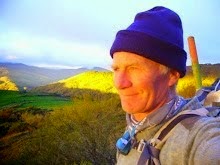
Twelve days and 1200km I`m in Porto Montt eating strawberries. The backdrop are snowcapped volcanoes and along the water front are artisan stalls of fresh fruit and handcrafts. Faded, jaded and definately slightly smelly after living outside for two weeks lonesome for soap. Now, refreshed and re-stocked. Next I cross onto the island of Chiloe and bike the coast which is the South Pacific`s equivalent of Newfoundland`s outports, a world of mists and magic.

Monday, December 8, 2014
Rolling down the Pan American Highway
Its day seven and I´m in Temuco, 750 km south of Santiago. Tomorrow I do a loop through the Lake District to see the volcanoes and hot springs. Then onto the Isla de Chiloe before peddling into the heart of Patagonia on the carratera austral. The first night´in Santiago the hostal had morphed into a retirement home and so instead of samba it was the sound of shuffling slippers.
Monday, November 24, 2014
Why Community Gardens Are Bending The World
Why Community
Gardens Are Bending The World
The great unbooted public are
unaware how the wheelbarrow is replacing the shopping cart. This has been the
way since Babylonian times in the developing world where, today, 200 million
urban folk (women and kids) feed 700 million people. Now the Western world,
rattled by economic downturn and heath concerns, is reaching for the trowel. We
are close to a tipping point when backyard growers produce more edible food
than industrial farmers.
Community gardens hit the hot
buttons – food security, diminished resources and health concerns. The 10’ by
5’ raised bed is the building block of community in urban wastelands. Gardening
is a common language shared by all cultures and these initiatives are a win/win
for everyone - the spiky hair crowd have the satisfaction of giving
agri-business a slap in the face, immigrants bring gardening expertise that helps
integrate them into the community and property developers can pocket an 80% tax
saving by having a commercially zoned property reclassified as a garden prior
to construction.
Gardening no longer means
lost weekends, mastering arcane skills and an aching back. Vermicomposting turns waste into worm castings,
which can be worked with a trowel. Growing in raised beds doubles the output
and community support cheers you on. Crunching into a luscious carrot, you have
the happy thought that it didn’t take 100 calories of energy to produce 10
calories of edible food like its sappy supermarket brethren.
Sunday, November 9, 2014
Two Cups of Tea
Two Cups of Tea
Hugh Morshead
It all began at the parent
and teacher meeting at the end of my first year at High School. My parents sat
in shock as my teacher argued that I should take the year again. The kitchen
table meeting that evening left me gutted.
“Rory, we work so hard for you, you break
our hearts. It’s not just the grades, but when he insinuated that you cheated
in exams that was a knife in my heart,” said Mom.
“I’ll do better next...”
“First, your pony has to go,
you’ve outgrown Tonka anyway. Then, you work this summer so you stay out of
trouble”.
The next day is worse.
“I talked to Gloria De Bacle
last night. The Chascomus Hunt and Country Club are hiring... oh, and Penelope
is coming to try Tonka,” said Mom.
“Ahh, no, she’s a dressage rider.”
I grab my bike and peddle furiously to the
gypsy encampment seeking solace. Liam and his Dad, Mick, are working on a car
and his sister, Siobhan, is skinny a rabbit.
“What’s up with you, this
fine mornin’,” said Mick.
“My life’s destroyed. Tonka is for sale
and I could be conscripted into the Chascomous labour gang.
“And why would this be?”
“My grades were sketchy.”
“School just replaces ignorance with
confusion, but, there’s no harm in work and you should be ridin’ horses not
ponies. Come on jump in the truck, I have to go over to Owens to shoe a horse.”
Mick and Owen Monet are both horse
dealers. That was all they had in common. Mick regrets having to be dishonest,
Owen thrives on it. Their appearance and lifestyle are also opposite. Mick is a
big raw-boned man with a battered face and wears soiled work clothes; like a
granite outcrop, he is all rough edges. Owen, on the other hand, is a chameleon;
he can blend into any milieu. Like a water-worn pebble, his smoothness prevents
creditors and lawyers getting a grip on him. However, the real difference is
that Owen has elevated from the grubby world of horse dealing to the real
business of trading in prestige and information.
“How’s business?” said Mick, as he steps
out of the truck and continues, “You know, Rory, the hell-rider that lives down
by the strand. He is cryin’ the blues ‘cos he’s losing his pony.”
“I’ve outgrown him and the De Bacles are
coming on Sunday to try him,” I said.
“Well, he couldn’t go to a better home,”
said Owen.
“You‘ll see him every day when you’re
working at Chascomous,” adds Mick.
“When do you start there?” Said Owen.
“Next week, if I get the job; they’re
building a new cross-country course.”
“While Mick is doing the shoeing, why don’t
you hop on one? The chestnut in the first stall is a lovely ride.”
I go into the barn with its double row of
stalls either side of a center aisle. I take the head collar off the hook and
slide the door open. The sleek chestnut horse looks at me quizzically. My real
education had come from hanging around Liam and Mick; they had taught me how to
establish a rapport with any horse. I slip the head collar on him and lead him
to the crossties in the aisle to be groomed and tacked. I warm him up jogging
around the arena and then jump through the line of show jumps. It is effortless
for us both.
“He just came in last week, he has
potential doesn’t he?” Said Owen, as I take him back to the stall and untacked
him.
“Ya, he’s a sister-kisser...no problem.”
“Anytime you want to come and ride, you
are welcome,” he said with a friendly smile.
“Thanks, I might take you up on that,
I’ll have nothing to ride when Tonka goes.”
“You’re very confident the sale will go
through.”
“Oh, Tonka is a real gentleman and
Gloria De Bacle would never put her daughter at risk...though, I can’t bare
thinking of the endless dressage he will have to do.”
“There is a way you can keep your pony
without risk to anyone,” said Owen.
“How?”
“Give him two cups of well-stewed tea in
his feed an hour before he’s ridden and he’ll be a different horse.”
“What do you mean?”
“It’ll just give him a bit of an edge. When
a rider tries a new horse, they are nervous and fear travels down the reins,
neither will feel comfortable with each other. That uncertainty is enough to
insure there is no sale.”
I
peddle home with my brain racing. My friends call me, Captain Apache, after the
way I scalped the competition at the local shows. My only real success is with
Tonka. I need time to find the right home for him. Handing in homework on time
would fix my grades.
The De Bacles are due at nine. I slip the
teapot out to the stables, mix up a mash and stir in the tea. Tonka wolfs it
down. Shortly, I hear the swish of gravel as a black sedan curves in front of
the house.
“Wonderful to see you again, Gloria...and
you too, Penelope,” said Mom.
“We do hope your pony will be suitable,
we can’t stay too long because Owen Monet has a new chestnut we just must look
at.”
“Oh really,” there is enough meaning in
the words to pack a suitcase.
“I can’t stand the man, he’s an oil
slick... but his horses win gold.”
My brain races. The bastard had tricked
me so he could make a sale. I agonise about what to do. I look at Penelope, a
slim blonde in form-fitting breeches and polished riding boots. I wish I had
been able to ride Tonka before they came.
“You don’t need spurs; he knows all the
aids and responds to the lightest touch.”
“Penelope likes to be properly attired
when she rides,” said Gloria.
As
soon as she sat in the saddle, Tonka’s ears twitched. They went into the back field,
rode some circles, and then cantered. Tonka and I were partners; Penelope rode
as if the pony was an employee. He is not happy and gives a couple of half
bucks.
“Take him for a canter around the field,”
shouts Gloria.
Instead of letting him ease into the
canter, she grips the reins tightly pulling on his mouth. Tonka takes off and the canter becomes a
gallop.
“Circle him, circle him,” screams
Gloria. Penelope leans back with her legs outstretched, she has lost all
contact. They whip around the corner; she tries to jump off and hits the ground
like a rag doll.
She lies motionless. The two women run
across the rough field frantically. Mom knees and cradles the girl’s head in
both hands. Gloria frantically dials.
“What’s the address, what’s the
address?” she screams. Mom recites the address.
“Wriggle your toes,” the boots move,
“now wriggle your fingers,” fingers move spastically.
“Oh, thank God, it’s not her spine,”
said Gloria.
“Where does it hurt?”
“It’s my hip,” said Penelope, sobbing.
“You’re going to be alright darling; the
ambulance will be here any minute.”
“Rory, go to the road and show the ambulance
how to get here,” said Mom.
The ambulance, with lights flashing,
arrives shortly and I direct them across the field. Tonka munches grass with
the reins caught around one leg. I take him back to the barn. I feel sick with
what I have done. The stupid girl couldn’t ride and it is really dumb to bail out
from a gallop. It was no good; I knew it was my entire fault. The ambulance makes
its way back to the stables and I open the gate.
“Is she going to be okay?”
“We just wrap ‘em and pack ‘em,” he
said, with macabre jocularity. The two mothers came across the field with looks
of anguish.
“Come in for a quick cup of tea, you
need a moment to get over the shock before driving to the hospital.”
“I don’t know if I could stomach it, I
feel physically sick.” The two walk to the house. I shuffle back to the stables
and try to make sense of it all. I ride Tonka and down the road to cool him
off.
A car slows down behind me, it is Owen.
He pulls alongside and lowers the window.
“Did she have a fall?”
“No, she bailed. Tonka is just not used
to spurs.”
“Or a cup of tea,” said Owen, adding, “a
horseman’s grave is always open.” I
could not believe his callousness.
“They’ve taken her to the hospital.”
“You and I are partners now, we’ll keep
our little secret to ourselves,” he said, with a tight smile that had a blade
in it. I slump in the saddle, sick over of the terrible price I had paid to
keep Tonka for a little longer. By the time I got home, Gloria had left and my
mother is standing at the door.
“Rory, have you seen the tea pot? I
can’t find it anywhere.”
“It’s in the tack-room,” I reply.
“Why on earth did you take it there?
You have a perfectly good travel mug. I wanted to make Gloria a proper cup of
tea; instead, I had to use tea bags. I was mortified.”
I went back to collect the
teapot. I wanted to smash it and Owen Monet against the wall.
“Gloria just phoned, Penelope is going
to be okay, she has a big bruise and a mild concussion...and she said you can
stable Tonka at the Club when you work there. Penelope would like company when
she rides,” said Mom.
“Thank heavens she is going to be
alright.’
“Gloria wants to give you dressage lessons;
she says you need them...cup of tea? She asks, offering the teapot.
“I’ll have a glass of milk, thanks.” I
took the milk to my room and swore that never again would I be so selfish and
stupid.


Saturday, November 8, 2014
Return to Patagonia
I fly to Santiago, Chile on Nov. 30th for ten weeks biking and trekking in Patagonia. The plan is to bike south to Puntas Arena then turn right to visit the penguins further up the coast. Will stop along the way to trek.
How to build a hobbit house
Building a hobbit house requires hobbit sense – work with nature, adapt to local conditions and belong to a community. The currency of construction is barter, recycle and goodwill. Here are some tips to help you on your journey to handcrafting a dream into reality.
.Instead of orientating the building due south, have the door face east. This allows the south-facing wall with its large windows to maximize passive solar heat and light.
•The sub-soil provides insulation and structural strength, the bones of the building are a frame of massive logs, these support the roof and walls.
•Earth bag construction works because the bags and dirt are free, the inherent structural strength and there are no time constraints. That said, they weigh up to 110 lbs. and the pounder comes in at 38 lbs – mucho oats and quinoa!
•The sun powers the lights and the dead trees the heat.
• The living roof and walls moderate the temperature and grow food.
• The building is twenty-foot wide and eight-feet high. The peak is two feet higher than the external wall.
Hobbits follow the laws of nature. It is essential to understand the dynamics of structural stress, water management and gravity – the glue of the universe. My dream did not come with a blueprint, there are times when you have to stop and think; for example, the dirt bags are hard to pound rigid when the walls are over five-feet high. I switched to straw bale construction for the remaining two feet. Instead of doing standard straw bale construction, I double bagged straw into used plastic wood shavings bags. The bags were sandwiched between tight twelve-gauge wire.
Let the ground be your engineer, excavate in autumn and build the following spring. If there are water problems, they will then be obvious – it is hard to attain satori with soggy socks. Read the land and the plants for the best site.
Water helps to break up bedrock for the post-holes. Nails partially hammered into the posts anchor the cement when setting the posts. The radial logs that connected the outer nine posts to the center are lowered into position with a backhoe. Twelve-inch nails fasten the beams to the posts. The concave wall and twenty-inch wide hard bags knitted together with re-bar transform the structure into one solid unit. The pounder was a hockey stick set in concrete to form an eight by twelve-inch cylinder; a sledgehammer packs the upper layers. The top two-feet of the wall is built with straw stuffed into plastic shavings bags. Wedge the bags tightly in place and then secure them between two strands of wire, one on the inside and one on the outside of the wall. Clinch the wires tightly together with baler twine in two places equidistant apart.
The roof has five layers. First, the nine radial 10” beams connecting the outer nine posts to the center post, then cedar poles form a lattice like a spider’s web over the beams. Oak planks, recycled from a paddock fence, are nailed to the poles and completely cover the roof. Two old farm tarps, a trampoline deck and an inflatable raft soften the dips and spikes. These are then cover with a heavy-duty industrial tarp. Six inches of hay protects this tarp from the timber frame (split cedar rails) that holds it in place. The timber frame consists of an outer ring connected to an inner ring. The roof is then covered with 18” of ‘black gold’ worm castings compost, this anchors the timber frame the same way a ‘dead man’ secures a retaining wall.
The roof overhang and the exterior tarps provide added protection from moisture. The walls are back-filled with dirt and the site reverts to natural landscape. Drainage pipe is buried below grade around the outside and then back-filled with rock. Stakes and wire mesh anchor the sod to the front side of the building. The interior will be parged with a breathable mortar mix next spring.
Oh, one final point – this is of course, a hen house. It is perfect for raising chicks. The temperature is stable and it could withstand rampaging woolly mammoths never mind a marauding fox. It cost $65 to build and that is reasonable for a backyard chicken operation.
Subscribe to:
Posts (Atom)